Makhana Powder Exporter Standards for Quality, Traceability and Global Trade
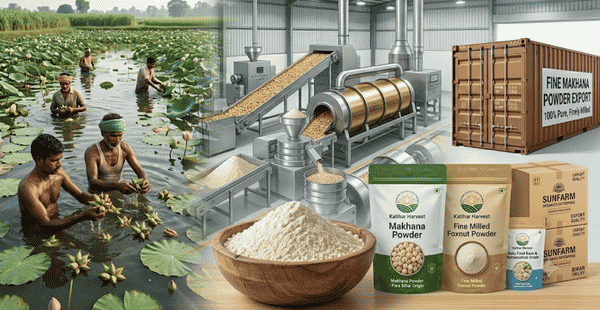
Makhana now serves markets for nutritious foods, bakery blends, wellness products, and cooking mixes. Its growing use across product lines makes dependable sourcing important for repeat production. This helps importers compare offers, plan production, and define purchase specifications before discussing shipment schedules. Buyers examine origin, cleanliness, and supply reliability. A capable Makhana Powder Exporter treats each stage as part of product quality. Clear specifications simplify sourcing. SUNFARM ORGANICS can present makhana powder with careful handling and transparent information. This matters when a Makhana Powder Exporter serves varied buyer requirements.
Why Makhana Powder Exporter Is Gaining Commercial Attention
Makhana powder suits porridge mixes, snack coatings, desserts, bakery recipes, and instant foods. Its mild taste blends with sweet or savoury ingredients without overpowering recipes. Its connection with traditional food habits gives brands an opportunity to introduce a familiar ingredient in modern formats. A Makhana Powder Exporter can help manufacturers assess suitable grades.
Demand alone does not guarantee a successful launch. Businesses need clear specifications. A Makhana Powder Exporter should understand application, particle size, packaging, and shipment requirements. Discussing these points early helps prevent differences between samples and bulk consignments. A Makhana Powder Exporter should record agreed details for each order.
Raw Material Selection Shapes the Final Powder
Quality begins before milling. Clean, properly processed makhana should meet defined parameters. Buyers may review colour, aroma, texture, moisture, and impurities. Consistent raw material supports predictable performance.
Sorting and inspection matter because unwanted particles can affect appearance and processing. A responsible Makhana Powder Exporter checks incoming material and records lots. This supports traceability and helps teams investigate concerns if a shipment falls short of agreed specifications.
Processing Controls for Uniform Results
Milling requires suitable equipment and controlled operating conditions. The goal is consistent powder with limited contamination and moisture exposure. Required fineness varies by application: beverage mixes, bakery ingredients, and coating blends may need different textures.
Screening after milling helps achieve the agreed particle range. Hygienic areas, clean equipment, and careful handling matter. An experienced Makhana Powder Exporter should explain its processing stages clearly instead of relying on broad quality claims. Buyers can judge whether the process suits their needs and whether the Makhana Powder Exporter can repeat specifications. Written limits for these measures should be agreed before commercial production starts.
Documentation and Traceability in Export Supply
International food trade depends on accurate information as well as product quality. Before dispatch, confirm product descriptions, batch details, net weight, packaging, and shipping documents. Markets may require additional certificates. Importers should verify current rules with the relevant authorities.
Traceability links a finished shipment with its production history. Batch codes and retained records can identify the raw material lot, processing date, and packing details. Therefore, a Makhana Powder Exporter should make documentation part of its routine system. Records support communication among suppliers, freight partners, importers, and quality teams.
Packaging That Protects Product Integrity
Powder can absorb moisture and odours when packaging or storage conditions are unsuitable. Packaging should provide an appropriate barrier and remain securely sealed during handling and transit. Pack size depends on production volume and distribution plans. Materials must suit destination requirements.
Store stock in a clean, dry place, away from sunlight and moisture. A Makhana Powder Exporter can share storage guidance and confirm the packaging format before an order is finalised. These details help preserve product condition throughout the supply cycle when a Makhana Powder Exporter ships across long distances.
Working with a GI Tagged Makhana Supplier
When regional identity matters, a GI tagged makhana supplier may match a buyer’s sourcing criteria. Geographical indication status applies to a defined product and region under applicable rules. Businesses should verify registration, authorised usage, and supporting documents before making claims. Distinguish raw makhana origin from the location of powder processing. Accurate descriptions prevent misleading labels and support confidence throughout the supply chain.
How SUNFARM ORGANICS Can Support Buyers
SUNFARM ORGANICS can present its offer through the information professional buyers need: product specifications, pack formats, order quantities, quality checks, and dispatch coordination. Discussions should start with the application and destination market. Both sides can confirm grade, samples, packaging, and documentation.
A Makhana Powder Exporter should communicate realistic lead times and explain how orders are handled. Buyers benefit when questions receive direct answers and details remain consistent across quotations, samples, and invoices. SUNFARM ORGANICS can follow this disciplined approach to help importers assess suitability before ordering larger volumes.
Building a Reliable Procurement Process
Before selecting a supplier, buyers should prepare a product brief. Include intended use, preferred fineness, quality expectations, pack size, estimated demand, and delivery destination. This helps suppliers provide relevant information.
A sample lets teams assess colour, aroma, texture, and recipe performance. Compare it with the written specification and record adjustments. A Makhana Powder Exporter that welcomes evaluation makes procurement more transparent. Confirm payment terms, shipment responsibilities, inspections, and quality procedures in writing.
Conclusion
Makhana powder has potential across food applications, but successful trade requires more than market interest. Buyers need suitable raw material, controlled processing, protective packaging, traceable batches, and accurate export documents. Selecting a Makhana Powder Exporter that explains these details can reduce uncertainty and support consistent purchasing decisions. SUNFARM ORGANICS can strengthen buyer confidence through clear specifications, application discussions, and careful supply coordination. With practical checks at every stage, businesses can introduce makhana powder while respecting quality expectations and destination rules.
 Idli Dosa Batter Filling Machine for Accurate, Hygienic Packaging
 Best PPF in Scarborough: Professional Paint Protection for Your Vehicle
 PVC Pan Card Printing for Professional Card Quality and Durability
 Industrial Batteries for Efficient Power Across Industrial Operations
 Tiles Manufacturers in Gujarat for Modern Spaces and Lasting Quality
 Masala Making Plant for Efficient Spice Processing and Production
 100 Hour Kundalini Yoga Teacher Training in Rishikesh for Inner Awakening
 Investment Banking Course Bangalore for Finance Careers in a Changing Market
 Custom URL Shortener for Clearer Links and Smarter Digital Sharing