India-US Relations: A Friendship Shaping Global Cooperation
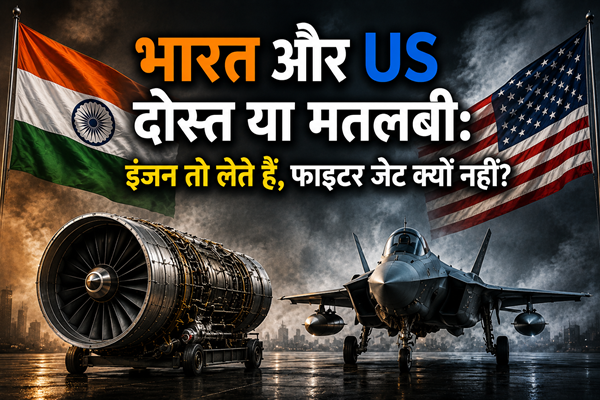
For businesses, diplomats, students, and citizens, India-US Relations: A Friendship Shaping Global Cooperation offers a useful way to understand one of the most important partnerships in today’s international system. The relationship now covers trade, defense, technology, education, energy, and global diplomacy. Yet, it also faces disagreements over tariffs, Russian energy purchases, and foreign-policy priorities. A balanced view requires attention to both cooperation and friction.
A Partnership Built Over Time
India and the United States moved from limited Cold War cooperation toward a broader strategic relationship after the 1990s. India-US Relations: A Friendship Shaping Global Cooperation reflects decades of institutional contacts.
India-US Relations: A Friendship Shaping Global Cooperation and Trade
Economic ties remain central to the relationship. The two countries trade goods and services across technology, pharmaceuticals, engineering, energy, agriculture, and professional services. In February 2026, Washington announced an interim trade framework with New Delhi, linking reciprocal market access with broader negotiations on a bilateral trade agreement.
However, trade relations have also experienced pressure. Tariffs and disagreements over market access have created uncertainty for exporters and manufacturers. By September 2026, negotiations remained important, while new U.S. measures concerning countries importing Russian oil raised fresh concerns in New Delhi. Reuters reported that India warned such measures could affect bilateral ties and energy markets. These developments show why India-US Relations: A Friendship Shaping Global Cooperation cannot be understood only through positive announcements.
India-US Relations: A Friendship Shaping Global Cooperation and Defense
Defense cooperation has become another major pillar. The countries conduct military exercises, expand information sharing, and discuss defense technology and industrial collaboration. Their engagement also connects with wider Indo-Pacific security through the Quad.
At the same time, India maintains an independent foreign-policy approach. New Delhi continues to work with Russia on defense and energy while developing closer ties with Washington. That approach can create friction, especially when U.S. policy targets Russian energy or defense relationships. Therefore, India-US Relations: A Friendship Shaping Global Cooperation includes cooperation without requiring complete alignment on every international issue.
Technology and Critical Supply Chains
Technology has opened another important area of cooperation. Artificial intelligence, semiconductors, telecommunications, space, critical minerals, and advanced manufacturing are increasingly linked to economic resilience. A 2026 U.S.-India critical minerals framework sought to strengthen supply chains and reduce dependence on concentrated sources, according to the Council on Foreign Relations. Such initiatives give India-US Relations: A Friendship Shaping Global Cooperation a practical economic dimension beyond traditional diplomacy.
Indian technology professionals contribute strongly to the U.S. economy, while American companies maintain substantial operations and investment interests in India. Education and research exchanges connect universities, entrepreneurs, scientists, and skilled workers. Consequently, India-US Relations: A Friendship Shaping Global Cooperation extends into everyday economic and social networks.
The Role of Global Cooperation
The relationship also matters because both countries participate in wider international institutions. India seeks strategic autonomy and maintains relationships with Russia, China, Europe, Japan, Gulf states, and developing economies. The United States works with India through the Quad and other multilateral mechanisms. This environment means India-US Relations: A Friendship Shaping Global Cooperation can influence discussions on climate, energy security, maritime rules, technology standards, and crisis management.
For a separate South Asian context, Nepal Floods and Climate Compensation: Role of India and China highlights questions of disaster response, climate responsibility, financing, and regional cooperation. It should remain a distinct topic because its geographic focus and policy concerns differ from the India-U.S. bilateral relationship.
Challenges Ahead
The partnership still faces difficult questions, and India-US Relations: A Friendship Shaping Global Cooperation remains shaped by competing interests. Trade disputes can affect investment, while energy policy can create disagreement over Russia. Regional developments can also produce different priorities. Carnegie India noted in August 2026 that recent tensions involved tariffs, trade, Pakistan, Russia, and evolving U.S. priorities in the Indo-Pacific.
Managing these differences will require sustained communication. India is unlikely to abandon strategic autonomy, and the United States will continue to pursue its own economic and security objectives. The challenge is finding overlapping interests while keeping disagreements within diplomatic channels. That balance will shape India-US Relations: A Friendship Shaping Global Cooperation in the years ahead.
The Path Forward
Future cooperation could focus on resilient supply chains, advanced manufacturing, clean energy, defense technology, digital infrastructure, and education. The February 2026 trade framework showed that both sides can pursue negotiations. The May 2026 visit of Secretary of State Marco Rubio also covered defense, strategic technologies, trade, investment, energy security, connectivity, and education, according to India’s public broadcaster.
A durable relationship will depend on realistic expectations. Neither country needs identical policies to cooperate effectively. Instead, India-US Relations: A Friendship Shaping Global Cooperation can develop through practical agreements, transparent dialogue, and respect for each country’s interests. This can help both governments respond to pressure without letting individual disputes define the relationship.
Conclusion
The story of India-US Relations: A Friendship Shaping Global Cooperation is one of expanding engagement combined with periodic disagreements. Trade, defense, technology, education, and people-to-people connections provide substantial foundations, while differences over tariffs and foreign-policy choices remain significant. For readers of infosagar, India-US Relations: A Friendship Shaping Global Cooperation should be understood as a broad and evolving relationship rather than a fixed alliance. Its future will depend on how effectively New Delhi and Washington manage differences while developing practical cooperation in shared areas.
 Ic7 Game: A Practical Guide to Features, Access and Safe Use
  Tax Consultants in Mumbai for Clear and Practical Tax Planning
  RS9 Come for a Simple and Convenient Online Experience
  Top Logistics Company in India for Smarter Business Growth