The food processing industry continues to grow rapidly as consumer demand for packaged spices increases across domestic and international markets. Manufacturers are constantly seeking efficient solutions to improve productivity and maintain product quality. In this competitive environment, a Masala Making Plant plays a vital role in streamlining spice processing operations while ensuring consistency and hygiene standards. Businesses that invest in advanced machinery can significantly enhance production capacity and meet market demands more effectively.
Modern spice processing requires precision, efficiency, and quality control at every stage. Therefore, selecting the right equipment is essential for achieving long-term business success and maintaining customer satisfaction.
Importance of Modern Spice Processing Equipment
The spice industry depends heavily on maintaining flavor, aroma, and texture throughout the production process. Traditional methods often involve higher labor costs and inconsistent results. As production volumes increase, manufacturers require automated systems that can handle large quantities efficiently.
Many processing units rely on a Masala Making Plant because it integrates multiple stages of spice production into a streamlined workflow. This approach reduces manual intervention and improves operational efficiency.
Additionally, modern machinery helps businesses maintain hygiene standards while minimizing product contamination risks. As a result, manufacturers can deliver high-quality products that meet industry requirements and consumer expectations.
Key Components of a Spice Processing Plant
A complete spice processing setup consists of several machines designed to perform specific tasks. Each component contributes to smooth and efficient production operations.
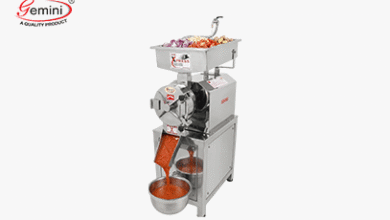
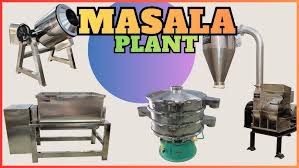
Cleaning machines remove impurities such as dust, stones, and unwanted particles from raw materials. Grinding equipment converts spices into fine powders with consistent particle size. Mixing units ensure uniform blending of various spice ingredients.
A well-designed Masala Making Plant also includes sieving systems, conveying equipment, and packaging machines. Together, these components create a seamless production process that improves output quality and operational efficiency.
The integration of advanced technology further enhances accuracy and reduces processing time, helping businesses achieve greater productivity.
Benefits of Investing in Advanced Machinery
Modern food processing equipment offers numerous advantages for spice manufacturers. One of the primary benefits is increased production capacity. Automated systems can process large quantities of spices within shorter timeframes compared to traditional methods.
Manufacturers often choose a Masala Making Plant because it helps reduce labor requirements while maintaining consistent product quality. This combination leads to improved profitability and operational performance.
Another important benefit is energy efficiency. Advanced machinery is designed to optimize resource utilization, reducing production costs over time. Furthermore, automated systems help minimize product wastage and improve inventory management.
These advantages make modern processing equipment a valuable investment for businesses aiming to expand their operations and strengthen market competitiveness.
Applications Across the Food Industry
Spices are essential ingredients in a wide range of food products. Consequently, spice processing machinery serves multiple sectors within the food industry.
Companies producing packaged spices, seasoning blends, instant food products, and ready-to-cook mixes often depend on a Masala Making Plant to ensure consistent product quality. The equipment supports both small-scale and large-scale manufacturing operations.
Food exporters also benefit from efficient processing systems because international markets require strict quality standards and uniform product specifications. Therefore, advanced machinery plays a crucial role in meeting these expectations.
As demand for processed food products continues to increase, the importance of reliable spice processing solutions becomes even more significant.
Features to Consider Before Purchasing
Selecting suitable machinery requires careful evaluation of several factors. Businesses should assess production capacity requirements, available space, and future expansion plans before making an investment.
When choosing a Masala Making Plant, manufacturers should consider machine durability, energy efficiency, automation capabilities, and maintenance requirements. These factors directly impact long-term operational performance.
It is also important to evaluate safety features and compliance with industry regulations. Reliable equipment helps ensure smooth operations while reducing downtime and maintenance costs.
Furthermore, businesses should seek machinery that offers flexibility for processing different types of spices and seasoning blends. This versatility can provide additional growth opportunities in the future.
Why Choose Radhe Food Processing Machinery
Investing in quality equipment is essential for achieving consistent production results. Radhe Food Processing Machinery is recognized for delivering innovative solutions that support the needs of modern food manufacturers.
The company provides advanced systems designed to improve productivity, efficiency, and product quality. Businesses looking for a dependable Masala Making Plant can benefit from machinery engineered to meet industry requirements and operational demands.
Radhe Food Processing Machinery focuses on reliability, performance, and customer satisfaction. Their equipment is developed using modern technology to support efficient spice processing across various production scales.
By choosing trusted machinery solutions, manufacturers can improve operational efficiency while maintaining high-quality production standards.
Future Trends in Spice Processing Technology
Technological advancements continue transforming the food processing industry. Automation, digital monitoring systems, and smart manufacturing practices are becoming increasingly common across production facilities.
Manufacturers investing in a Masala Making Plant are now exploring solutions that offer greater control, improved efficiency, and real-time performance monitoring. These innovations help businesses optimize production processes and reduce operational costs.
Sustainability is also becoming a major focus within the industry. Energy-efficient equipment and environmentally responsible manufacturing practices are gaining importance as businesses work toward long-term growth objectives.
As technology continues evolving, modern spice processing machinery will play an even greater role in supporting industry development and competitiveness.
Conclusion
The spice industry requires efficient processing solutions to maintain quality, productivity, and profitability. Advanced machinery enables manufacturers to meet growing market demands while ensuring consistency throughout the production process.
With innovative solutions from Radhe Food Processing Machinery, businesses can enhance operational performance and achieve sustainable growth. By investing in a reliable Masala Making Plant, manufacturers can improve efficiency, reduce production costs, maintain superior product quality, and strengthen their position in an increasingly competitive food processing market.