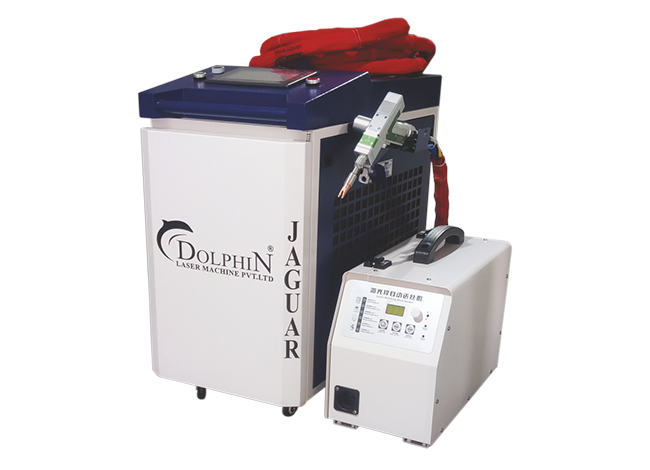
Modern industries demand speed, accuracy, and consistency in every production process. A Laser Welding Machine plays a crucial role in meeting these expectations by offering advanced joining solutions across multiple sectors. This technology has transformed manufacturing by delivering clean welds, minimal distortion, and excellent repeatability. Laser Machine Manufacturers continue to refine these systems to support growing industrial requirements and evolving material standards.
Laser Welding Machine Working Principle Explained Clearly
Understanding how a Laser Welding Machine operates helps industries appreciate its value. The process uses a concentrated laser beam to generate intense heat, allowing materials to fuse precisely at the joint. Because the heat-affected zone remains small, the surrounding material retains its structural integrity.
This focused energy delivery enables manufacturers to weld thin and thick materials efficiently. Laser Machine Manufacturers design machines with intelligent controls that ensure consistent output, even during high-speed production cycles.
Laser Welding Machine Advantages in Industrial Applications
One of the main reasons industries adopt a Laser Welding Machine is its unmatched precision. The process allows fine control over weld depth and width, which improves overall product quality. As a result, manufacturers experience fewer defects and reduced material waste.
Additionally, laser welding supports high-speed operations. Faster processing times increase productivity while maintaining accuracy. Laser Machine Manufacturers emphasize these advantages when developing solutions for competitive manufacturing environments.
Laser Welding Machine Applications Across Industries
A Laser Welding Machine is widely used in automotive, electronics, aerospace, medical devices, and metal fabrication industries. In automotive production, laser welding ensures strong joints for body panels and structural components. Electronics manufacturers rely on this technology for delicate assemblies requiring minimal thermal impact.
Medical equipment production also benefits from precise and contamination-free welding. Laser Machine Manufacturers adapt machine configurations to suit different industry standards, ensuring compliance and performance reliability.
Laser Welding Machine Types and Their Industrial Use
Different production needs require different machine configurations. A Laser Welding Machine can be categorized into handheld, desktop, and fully automated systems. Handheld machines offer flexibility for repair work and small-scale fabrication. Desktop models suit workshops requiring stable precision for repetitive tasks.
Automated systems integrate robotics and CNC controls for large-scale manufacturing. Laser Machine Manufacturers develop these systems to support continuous operation while maintaining accuracy and efficiency throughout production runs.
Laser Welding Machine vs Conventional Welding Methods
Comparing a Laser Welding Machine with traditional welding methods highlights clear performance improvements. Conventional welding often results in wider heat-affected zones, leading to distortion and additional finishing work. Laser welding minimizes these issues by concentrating heat precisely where needed.
Furthermore, laser welding eliminates the need for filler materials in many applications. This reduces consumable costs and simplifies the process. Laser Machine Manufacturers promote this comparison as industries move toward cleaner and more efficient manufacturing practices.
Laser Welding Machine Role in Cost Efficiency
While the initial investment may appear higher, a Laser Welding Machine delivers long-term cost benefits. Reduced rework, lower energy consumption, and minimal maintenance requirements contribute to operational savings. Over time, these efficiencies significantly reduce overall production costs.
Additionally, fewer consumables and faster cycle times increase return on investment. Laser Machine Manufacturers focus on building durable systems that maintain performance over extended operational periods.
Laser Welding Machine Selection Factors for Buyers
Selecting the right Laser Welding Machine requires careful evaluation of production needs. Material type, thickness, and production volume should guide the decision-making process. Choosing the correct laser power ensures optimal performance without unnecessary expense.
Buyers should also consider software compatibility and automation potential. Laser Machine Manufacturers offer scalable solutions that allow businesses to expand capabilities as production demands increase, ensuring long-term adaptability.
Laser Welding Machine Safety and Quality Standards
Safety plays a critical role in laser welding operations. A Laser Welding Machine includes protective enclosures, interlock systems, and monitoring controls to ensure operator safety. Compliance with international safety standards is essential for industrial use.
Quality assurance systems further enhance production reliability. Laser Machine Manufacturers integrate real-time monitoring to detect inconsistencies, helping manufacturers maintain consistent weld quality across large production volumes.
Laser Welding Machine Trends in Modern Manufacturing
Automation and digital integration are shaping the future of the Laser Welding Machine market. Smart manufacturing systems now allow data tracking, predictive maintenance, and remote operation. These advancements improve productivity while reducing downtime.
Customization is another key trend. Industries increasingly demand machines tailored to specific applications. Laser Machine Manufacturers respond by offering modular designs that balance performance, flexibility, and cost efficiency.
Laser Welding Machine Conclusion for Industrial Growth
A Laser Welding Machine represents a strategic investment for industries seeking precision, efficiency, and scalability. Its ability to deliver high-quality welds with minimal waste makes it an essential tool in modern manufacturing environments. Over time, the benefits of speed, consistency, and reduced operational costs become evident.
With continuous innovation and technical expertise from Laser Machine Manufacturers, laser welding technology supports sustainable industrial growth. Making the right selection ensures improved production quality, long-term value, and a competitive edge in today’s demanding market.