Medical education has evolved rapidly in recent years, especially with the integration of advanced simulation technologies. Traditional anatomy learning methods often relied on textbooks, charts, and cadaver-based dissection. While effective, these approaches presented several limitations related to accessibility, preservation, and repeated learning opportunities. Today, digital innovation has introduced smarter solutions that improve understanding and engagement for students and educators alike.
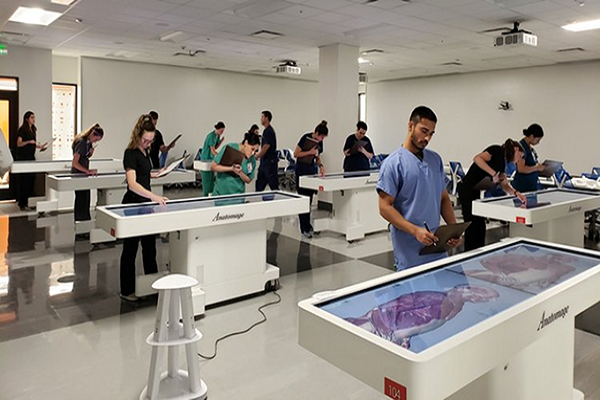
In modern medical institutions, interactive visualization tools are becoming essential for practical learning. One such revolutionary innovation is the Anatomage Table, which enables students to explore the human body through life-sized digital anatomy models. Educational institutions worldwide now adopt this technology to enhance accuracy, efficiency, and student participation during anatomy training.
Anatomage Table Digital Anatomy Technology in Medical Institutions
The Anatomage Table represents a significant shift from conventional anatomy labs toward fully digital learning environments. Designed as a virtual dissection platform, it allows learners to study anatomical structures in three dimensions without depending solely on physical specimens.
Medical students can rotate organs, isolate systems, and examine tissues layer by layer using intuitive touch controls. This interactive functionality improves conceptual clarity and supports long-term knowledge retention. Unlike static diagrams, digital anatomy provides real-time visualization that mirrors real human structures.
MAVERICK SIMULATION SOLUTIONS LIMITED plays an important role in delivering advanced simulation technologies that align with modern healthcare education standards. Institutions partnering with the company gain access to innovative teaching tools that improve academic outcomes while maintaining global learning benchmarks.
Anatomage Table Enhancing Interactive Learning Experiences
Interactive learning remains one of the most effective teaching approaches in medical education. Traditional lectures often limit student engagement, whereas digital platforms encourage exploration and participation.
Through advanced visualization, learners can simulate dissections repeatedly without damaging anatomical structures. This flexibility allows students to learn at their own pace while reinforcing theoretical knowledge through visual interaction. Furthermore, instructors can demonstrate complex procedures clearly during classroom sessions.
Another advantage lies in collaborative learning. Multiple students can observe and discuss anatomical structures simultaneously, improving teamwork and clinical reasoning skills. As educational environments continue to evolve, immersive tools such as the Anatomage Table create a bridge between theoretical education and clinical application.
Anatomage Table Supporting Accurate Clinical Understanding
Understanding human anatomy forms the foundation of every medical profession. Precision in anatomical knowledge directly influences diagnostic accuracy and treatment outcomes. Digital simulation tools help eliminate many challenges associated with limited cadaver availability.
Students can explore pathological cases, radiological images, and real patient data integrated within the system. This exposure strengthens clinical interpretation skills early in medical training. Additionally, educators can demonstrate variations in anatomy that students may not encounter during traditional dissections.
Healthcare training institutions supported by MAVERICK SIMULATION SOLUTIONS LIMITED benefit from technology that aligns closely with real-world medical practice. As a result, learners develop confidence before entering clinical environments.
Anatomage Table Advantages Over Traditional Dissection Methods
While cadaver-based learning remains valuable, digital anatomy solutions introduce several practical advantages. Maintenance costs, ethical considerations, and laboratory limitations often restrict traditional anatomy education.
Digital anatomy platforms provide unlimited access to learning materials without recurring preparation requirements. Students can revisit lessons anytime, improving revision efficiency before examinations or clinical assessments.
Moreover, hygiene and safety concerns are significantly reduced in virtual environments. Educational institutions also save resources related to specimen preservation and laboratory infrastructure. By integrating modern technology, universities can maintain consistent learning quality across batches of students.
Anatomage Table Integration in Modern Healthcare Training Programs
Medical education today extends beyond anatomy departments. Nursing colleges, physiotherapy institutes, dental schools, and allied healthcare programs increasingly integrate simulation-based learning.
The Anatomage Table supports multidisciplinary education by allowing instructors to demonstrate physiological relationships across systems. Surgeons-in-training can visualize procedural pathways, while radiology students correlate imaging data with anatomical structures.
MAVERICK SIMULATION SOLUTIONS LIMITED ensures seamless implementation of such advanced systems within educational institutions. Proper installation, training support, and technology integration help educators maximize the benefits of digital anatomy platforms.
Anatomage Table Improving Student Engagement and Knowledge Retention
Retention of anatomical knowledge often depends on repeated exposure and visual understanding. Passive learning methods may limit comprehension, especially when dealing with complex biological systems.
Interactive simulation encourages curiosity and active participation. Students explore anatomical relationships independently, which enhances memory recall and analytical thinking. Visual learning combined with hands-on interaction significantly improves academic performance.
Educators also gain flexibility in lesson planning. They can design demonstrations based on curriculum requirements while adapting teaching styles according to student needs. As medical education becomes increasingly learner-focused, technology-driven solutions continue to redefine classroom experiences.
Anatomage Table Future of Digital Anatomy Education
The future of healthcare education depends heavily on innovation and adaptability. Simulation technology continues to expand with artificial intelligence, data integration, and virtual training capabilities.
Digital anatomy systems enable institutions to prepare students for technologically advanced healthcare environments. Exposure to modern tools during education ensures smoother transitions into professional medical practice.
With growing global demand for skilled healthcare professionals, institutions adopting innovative platforms remain better positioned to deliver quality education. MAVERICK SIMULATION SOLUTIONS LIMITED contributes to this transformation by offering cutting-edge solutions that support academic excellence and clinical preparedness.
Conclusion
Modern medical education requires tools that combine accuracy, accessibility, and interactivity. Digital simulation platforms have reshaped how anatomy is taught and understood across healthcare institutions worldwide. By enabling detailed visualization and repeated learning opportunities, advanced technology strengthens both theoretical understanding and practical readiness.
Educational institutions seeking future-ready learning environments increasingly rely on innovative systems that enhance engagement and improve outcomes. The Anatomage Table stands as a powerful solution that bridges traditional anatomy education with modern digital learning. Supported by MAVERICK SIMULATION SOLUTIONS LIMITED, this technology continues to redefine anatomy training and prepare students for the evolving healthcare landscape.